Pages

Search This World

LIVE TV Watch the news unfold

MYTV CNBC TV18 CNBC AAWAZ CNN IBN IBN7 IBN LOKMAT

Thursday, September 30, 2010

અયોધ્યા LIVE:ચુકાદાનું કાઉન્ટ ડાઉન

દેશ-દુનિયાની સાથે સાથે સમગ્ર અયોધ્યામાં પણ આજે રામજન્મભૂમિ-બાબરી મસ્જિદની વિવાદીત જમીન પર સાડા ત્રણ વાગ્યે થનારી ચુકાદાની સુનાવણીનો ખામોશીથી રાહ જોવાય રહી છે. કિલ્લામાં પરિવર્તિત થઈ ચુકેલી લખનૌ બેન્ચના કોર્ટ રૂમ નંબર-21માં બપોરે સાડા ત્રણ કલાકે જસ્ટિસ ડી.વી.શર્મા, એસ.યૂ.ખાન અને સુધીર અગ્રવાલની બેન્ચ ચુકાદો સંભળાવશે. આ કોર્ટરૂમનો દરવાજો બપોરે અઢી વાગ્યે ખોલવામાં આવ્યો છે. ત્યાર બાદ તમામ પક્ષકારોના વકીલો દાખલ થશે અને બરાબર સાડા ત્રણ કલાકે ત્રણેય જજોની બેન્ચ ચુકાદો આપશે.

 
ચાર સ્તરીય સુરક્ષા

અલ્હાબાદ હાઈકોર્ટની લખનૌ બેન્ચમાં સુરક્ષાનો એવો બંદોબસ્ત કરવામાં આવ્યો છે કે મામલા સાથે સંલગ્ન લોકો સિવાય અન્ય કોઈ અંદર જઈ શકશે નહીં. એકવાર અંદર ગયા બાદ ચુકાદાની સુનાવણી પૂર્ણ ન થાય, ત્યાં સુધી કોઈ બહાર આવી શકશે નહીં. લખનૌમાં ઉપસ્થિત હાઈકોર્ટ પરિસરના સમગ્ર વિસ્તારને નો એન્ટ્રી ઝોનમાં ફેરવી દેવાયો છે. કોર્ટ પરિસરમાં મોબાઈલ લઈ જવાની પરવાનગી નથી. કેટલાંક જજો અને અધિકારીઓને બાદ કરતાં કોર્ટ પરિસરમાં કોઈના માટે પાર્કિંગની પરવાનગી પણ નથી. મીડિયાકર્મીઓ માટે લખનૌના જિલ્લાધિકારી કાર્યાલયમાં જ મીડિયા સેન્ટર બનાવાયું છે. જીત કે હારને લઈને અતિરેક ભરી પ્રતિક્રિયા પર પ્રતિબંધ છે. કોર્ટ પરિસરમમાં ચાર સ્તરીય સુરક્ષા વ્યવસ્થા લાગુ કરવામાં આવી છે. સુરક્ષા સંબંધી નિયમાવલીને સખ્તાયપૂર્વક લાગુ કરવામાં આવી છે.

પોલીસ અને મીડિયાનો જમાવડો

લખનૌની સડકો પર માત્ર પોલીસ અને મીડિયાના લોકો જ દેખાય રહ્યાં છે. સમગ્ર રાજ્યમાં લગભગ 2 લાખ જવાનો તેનાત છે. દેશ-વિદેશના ઘણાં પત્રકારો કવરેજ માટે અહીં હાજર છે. મીડિયા સંસ્થાનોએ લાઈવ કવરેજની પૂર્ણ તૈયારીઓ કરી છે. અહીંની હોટલોમાં રૂમ ઉપલબ્ધ નથી, છત પણ બુક કરાવાય છે. હોટલોમાં ટીવી ચેનલોએ પોતાના અસ્થાયી સ્ટુડિયો બનાવી લીધા છે.

રાજ્યના માહિતી વિભાગે એક મીડિયા સેન્ટર બનાવ્યું છે. અહીં 500 પત્રકારોને બેસવાની વ્યવસ્થા છે. તેમાન માટે ચા-નાસ્તાની પણ વ્યવસ્થા કરવામાં આવી છે અને ઈન્ટરનેટ જેવી સુવિધાઓ પણ આપવામાં આવી છે.

4-30 પહેલા ચુકાદાની ખબર નહીં પડે

દુનિયા સામે આ ચુકાદો સાંજે સાડા ચાર કલાકે આવે તેવી શક્યતા છે. જજ સાડા ત્રણ કલાકે ચુકાદો વાંચવાની શરૂઆત કરશે. આશા છે કે ચુકાદાનો મહત્વનો ભાગ 60-80 પાનાનો હોઈ શકે છે. જજ એટલો ભાગ વાંચશે. ત્યાર બાદ મીડિયા સેન્ટર સુધી ખબર પહોંચાડતા ઓછામાં ઓછી 15 મિનિટ લાગશે. જો કે હાઈકોર્ટની વેબસાઈટ પર 4 વાગ્યે ચુકાદાની પૂર્ણ કોપી ઉપલબ્ધ કરવાનો દાવો કરવામાં આવ્યો છે. હાઈકોર્ટના ચુકાદાની 500 કોપીઓ તૈયાર છે. ચુકાદો સંભળાવાયા બાદ તેને વહેંચવામાં આવશે.

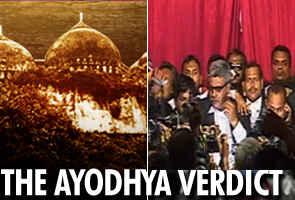
Ayodhya verdict: Allahabad High Court judgement soon

New Delhi / Lucknow:  Sixty years after it first went to court, there shall be a verdict in the Ayodhya title suit soon. The Lucknow bench of the Allahabad High Court comprising Justice S U Khan, Justice Sudhir Agarwal and Justice D V Sharma, have started proceedings to pronounce the judgement.

The litigants have reached Court No. 21 of the Lucknow Bench of the Allahabad High Court. Barricades have been erected about 100 metres from the courtroom and no one other than those connected with the case are being allowed anywhere near the it.

The verdict in the Ram Janambhoomi-Babri Masjid dispute will decide whether the 2.7 acres of disputed land on which the Babri Masjid stood before it was demolished on December 6, 1992, belongs to the Sunni Central Waqf Board or to the Akhil Bharat Hindu Mahasabha.

It has been a protracted legal battle, and people across the country have spoken in one voice on the need to maintain peace and harmony irrespective of the verdict.

The Ayodhya dispute at a glance;

  • The verdict to be delivered in Lucknow today considers a dispute over 2.7 acres of land in Ayodhya.

  • The dispute was first taken to court 60 years ago

  • There are four title suits that ask the court to decide on:

  -  ownership of the land

  - whether there was a temple at the site before 1538

  - did the idols of Lord Ram, Sita and Lakshman exist inside the mosque, or were the idols placed inside on 22 December, 1949?

There was communal tension when an idol of Lord Ram was found inside in December 1949, and the government confiscated the site. That is when the lawsuits began.

  • The Ramjanmabhoomi Trust holds that this land is the birthplace of Lord Ram

  • The Waqf Board holds that the land was site of the 16th century Babri mosque

  • In December 1992, thousands of kar sevaks, led by BJP and RSS leaders, demolished the Babri Masjid.


The litigants involved with the four suits being considered today are the following. All these cases were originally filed in the court of the Civil Judge, Faizabad, and are now before the High Court. (Ayodhya verdict: Legal issues at stake)

  • Gopal Singh Visharad - case filed on January 16, 1950. Gopal Singh Visharad has since died and his son Rajendra Singh is now the litigant. 
  

Relief claimed:
- That Hindu's be entitled to go to visit the dispute site and worship the idols there without any checks or obstructions.

- Prohibitory orders must be issued preventing anyone from removing the idols and closing the doors of the masjid.
  • Nirmohi Akhada - case filed on December 17, 1959. The case was filed by the Akhada through Mahant Ragunath Das, who is now dead.

Relief claimed:

- To give the management of the disputed site to the descendents of Mahant Ragunath Das, the Mahant of the Nirmohi Akhada.

  • Sunni Central Board of Waqfs, UP - case filed on December 18, 1961 by the Central Board of Waqfs, UP, through secretary and nine others.

Relief claimed:
- That the disputed site must be declared as a mosque and the area adjoining as a Muslim graveyard.

- That possession be given to the central board of waqfs.

  • On behalf of deity Lord Ram and Deoki Nandan Agarwal - case filed on July 1, 1989. Deoki Nandan Agarwal is a senior advocate and a retired judge of the Allahabad High Court.

Relief Claimed:


- That the disputed structure belongs to the deity Lord Ram.
 
- Injunction against the Waqf board preventing them from interfering in the building of the temple.
 
- Demolishing the existing structure of the Babri Masjid. (This was filed before the demolition of the Babri mosque in 1992)

Security measures:

Across the country, it has been life as usual today, including in Faizabad and Ayodhya, where schools and colleges are also open.

The Centre and the state governments, however, are taking no chances and so security has been tightened in sensitive areas and forces have been mobilised. All political parties and religious groups associated with the dispute have said they will respect the verdict.

There is strict vigil in Faizabad. More than 20,000 securitymen are on alert and there is arrangement for aerial surveys. (Watch: Life in Lucknow, Faizabad normal) I  (Mayawati: Centre didn't give enough forces)

  • 1,90,000 security personnel in Uttar Pradesh

  • 19 places have been identified as "sensitive."

  • Maharashtra, Kerala, Karnataka and Madhya Pradesh have been identified as trouble-prone.

  • Central forces would be 10 minutes away and on call with extensive deployment near sensitive spots.

  • India Air Force aircraft would be on standby to transport troops to eight places across the country.

  • Ban on bulk SMSes continues.

  • No pillion riders and parking not allowed near restricted sites in Delhi, Hyderabad.

अयोध्‍या: सुन्‍नी वक्‍फ बोर्ड का दावा खारिज, रामलला की मूर्ति हटाई नहीं जाएगी

अयोध्‍या विवाद पर इलाहाबाद हाईकोर्ट की लखनऊ बेंच का बहुप्रतीक्षित फैसला सामने आ गया है. कोर्ट ने विवाद से जुड़े सभी केसों पर फैसला सुनाते हुए सुन्‍नी वक्‍फ बोर्ड का दावा खारिज कर दिया है.
तीन जजों ने की पीठ ने 2-1 से सुन्‍नी वक्‍फ बोर्ड का दावा खारिज किया. सूट नंबर चार भी खारिज कर दिया गया है. कोर्ट ने फैसला सुनाते हुए कहा कि विवादित स्‍थान से रामलला की मूर्ति हटाई नहीं जाएगी. मूर्ति पर किसी का अधिकार नहीं रहेगा और वह आमजन की होगी.
जजों ने माना कि विवादित जगह भगवान राम की जन्‍मभूमि है और वह जगह हिन्‍दुओं की दी जाएगी.
कोर्ट ने तीनों पक्षों को बराबर-बराबर हिस्‍सेदारी देने की बात कही है. एक हिस्‍सा निर्मोही अखाड़े का, दूसरा मुसलमानों का और तीसरा हिस्‍सा हिंदुओं को देने की बात कही गई है.

The 10 top tech czars of the world


The global economy is still crawling out of recession. Although the economic pain continues to be felt across the world, the fortunes of the 10 richest American technology giants rose a combined $13.6 billion in 2010 compared with their net worth in the Forbes 400 list. For them, the opportunities seem endless.
Let us have a look the top tech czars of the world.
1. Bill Gates
Bill (William Henry) Gates, chairman and co-founder of Microsoft, is a business tycoon and a philanthropist. He co-founded Microsoft with Paul Allen.
His fortune climbed $4 billion in the past year. His net worth is estimated at $54 billion. According to Forbes, Gates is the second richest man in the world. He has held the top spot for 14 of the past 15 years in the past.
His stake in Microsoft is worth $16 billion. Gates wrote his first computer programme at age 13.  Gates graduated in 1973, scoring 1,590 out of 1,600 on the SAT and enrolled at the Harvard College.
Microsoft stock was flat over the last year, despite brisk sales of the new Windows 7 operating system.


2. Larry Ellison
Born to an unwed Jewish woman, Larry Ellison, co-founder and CEO of Oracle Corporation, was adopted by a middle class family in Chicago.
His net worth is estimated at $27 billion. Ellison left the University of Illinois at the end of his second year, after his mother died. He later studied computer designing and moved to California.
There he did several odd jobs for eight years. In 1977, Ellison and his Ampex colleagues, Robert Miner and Ed Oates, founded Software Development Labs, with $1400. The company was later renamed Oracle Corporation.
Oracle is the world's leading supplier of software for information management, and the world's second largest software company.
The stock price of Oracle climbed 23 per cent on strong earnings in the summer quarter and news of hiring former HP CEO Mark Hurd as Oracle co-president.
The 65-year-old Ellison often hits the headlines for his extravagant and flamboyant lifestyle.


3. Sergey Brin
Sergey Brin, the co-founder of Google, was born in Moscow.
California-headquartered Google Inc is a multinational public cloud computing, Internet search, and advertising technologies corporation which was founded in 1998 by Stanford students, Larry Page and Sergey Brin.
Google today runs over one million servers in data centers around the world, and processes over one billion search requests every day.His net worth is estimated at $15 billion.
Google has lost some of its market share in search to Microsoft's Bing.
Google leads the development of the Android mobile phone operating system, used on a number of phones such as the Nexus One and Motorola Droid. Alexa lists Google as the Internet's most visited website.


4. Larry Page
Larry Page, Google's other co-founder ,was born into a Jewish family in Michigan.
His net worth is estimated at $15 billion.  The world's No.1 search engine, Google has seen an impressive growth in these 12 years with profit to the tune of $6.520 billion and total assets of $40.497 billion.
His fortunes witnessed a drop $300 million from last year.  Page pays himself $1 a year in salary.
Besides, Gmail e-mail software, and social networking tools, including Orkut and, more recently, Google Buzz, Google's products extend to the desktop as well, with applications such as the web browser Google Chrome, the Picasa photo organization and editing software, and the Google Talk instant messaging application.
He was as an early investor in Tesla Motors, maker of the pricey all-electric roadster.


5. Michael Dell
Michael Dell, the founder of Dell Inc, one of the world's most successful IT  companies. He was born in Houston.
His Dell Computer has been struggling, but the large majority of the Dell founder's fortune now lies with investments made by MSD Capital, the 80-person investment firm created to manage his assets.
His net worth is estimated at $14 billion.
Dell became an entrepreneur at a very young age of 12, made his first $1,000 by selling stamps, and later sold newspaper subscriptions for Houston Post, making enough money to buy a BMW at 16.
His net worth is down $500 million from a year ago as the stock fell 29 per cent last year.


6. Steve Ballmer
Steve Ballmer, Microsoft's high-energy chief executive, was born in Detroit, Michigan.
His net worth is estimated at $13.1 billion.
Ballmer joined Microsoft in 1980, and became Microsoft's first business manager hired by Gates
He has overseen a successful launch of the newest Windows operating system amid continued stumbles in consumer tech, like the failure of its Kin phone. His net worth is down $200 million from last year.


 7. Paul Allen
Paul Gardner Allen co-founded Microsoft with Bill Gates. His wealth is estimated at $12.7 billion.
He was born in Seattle, Paul Allen befriended Bill Gates while in school.
Allen attended Washington State University, dropping out two years later to write software.
Two years ago, Allen was back in the news for funding the SpaceShipOne sub-orbital commercial spacecraft.
In 1983 he left Microsoft. His net worth is up $1.2 billion from 2009. His holding company Vulcan invests in technology including space travel and artificial intelligence.
Recently his  Interval Research sued the biggest companies in Silicon Valley for patent infringement.


 8. Jeff Bezos
Jeff Bezos is the founder, president, chief executive officer and chairman of the board of Amazon.com.
Amazon.com, an electronic commerce company is America's largest online retailer. It climbed five spots to rank at 6, from the 11th position it held in 2009.
Headquartered in Seattle, Washington, it started as an online bookstore, but soon diversified to product lines of VHS, DVD, music CDs and MP3s, computer software, video games, electronics, apparel, furniture, food, toys, and so on.
Amazon has established separate websites in Canada, the United Kingdom, Germany, France, Japan, and China.
His net worth is estimated at $12.6 billion. Bezos has sold $400 million of Amazon shares since January 2010.
A 30 per cent surge in the value of Amazon stock boosted Bezos net worth by $3.8 billion over the past 12 months.
Bezos still has 90 per cent of his net worth tied up in Amazon stock.


9. Mark Zuckerberg
An American entrepreneur, Mark Elliot Zuckerberg is known for co-founding the popular social networking site Facebook.
Zuckerberg co-founded Facebook with fellow classmates Dustin Moskovitz, Eduardo Saverin, and Chris Hughes while attending Harvard.
Zuckerberg was born in White Plains, New York to a Jewish family and raised in Dobbs Ferry, New York. He started programming when he was in middle school. Zuckerberg launched Facebook from his Harvard dorm room on February 4, 2004.
His net worth is estimated at $6.9 billion. As the value of social-networking site Facebook surged in the last year, founder Zuckerberg's net worth tripled.
The company's revenue expected to top $2 billion in 2010. Private-equity investments in Facebook put the value of the company at $23 billion.


10. Steve Jobs
Steven Paul Jobs is the co-founder and chief executive officer of Apple Inc. In 1976, Jobs, founded Apple along with Stephen Wozniak and Ronald Wayne.
Jobs previously served as CEO of Pixar Animation Studios and is now a member of the Walt Disney Company's board of directors.
Jobs was born in San Francisco and was adopted by Paul and Clara Jobs of Mountain View, Santa Clara County, California.
His net worth is estimated at $6.1 billion. Apple's market capitalization overtook that of Microsoft in May and it became the most valuable US company.
Apple seems unstoppable, with the release of the iPad tablet computer in April and new versions of the hot-selling iPhone. 
Job's owns shares worth $4.4 billion in Disney. His net worth grew $1 billion in the last year.

A milk bath in Mumbai awaits Rajnikanth

Its the Rajnikanth magic again. Today, within two hours of opening of the ticket window, tickets for all shows of Rajni's film, Robot: Endhiran got booked till Sunday.

And on Friday, the October 1st, there is going to be more drama. About 5000 Rajnikanth fans are organising a mega event to celebrate the release of another Rajnikanth film. Anand Raj of Agile Indiya Rajnikanth Fan Welfare Association gives us the details of this event. He says, “The reel of the movie will be taken to Ram Mandir in Matunga, to seek God’s blessing in a special puja. Thereafter on a horse driven chariot it will be taken to Arora theatre in Matunga, followed by a huge procession.” He adds, “In the procession, many fans will walk, carrying pots of milk on their heads and at the venue, Rajnikanth’s poster will be given a milk bath with about 100 to 200 litres of milk.”

Ask him about what is it that they like about Rajnikanth that they almost treat him like God and Raj replies, “I have no idea. I just know that I love him and all other members of the fan club love him too.”

Rajnikanth and Aishwarya Rai in Robot:Endhiran

Natrajan, the owner of Arora theatre says, “We have slightly increased the rates of the tickets. Usually our tickets are priced at Rs 60, 70 and 80 depending on the seats one chooses. For this movie it will cost Rs 80, 90 and 100. And on Sundays, it will be at the cost of Rs 90, 100 and 120.” He adds, “We are expecting huge crowds on the weekends for the reservation of the tickets. During the release of Sivaji:The Boss (Rajnikanth's earlier film), people had queued up since 7 am and have even had fist fights for buying the tickets."

India has 69 Billionaires, Mukesh Ambani is the Richest

mg_36132_mukesh_ambani_sm_280x210.jpgMukesh Ambani, chairman of Reliance Industries, has topped the latest Forbes’ India Rich List with a net worth of US$27 billion, for the third consecutive time. Steel magnate Lakshmi Mittal, remains at No. 2 with a net worth of US$26.1 billion. However both are less well off than they were a year ago, with 15% of Mukesh’s wealth and 15% Lakshmi’s being lopped off over the year.

India’s rising stock market and a booming economy that is expanding by 8.5% have boosted the net worth of the rich. The combined net worth of India’s 100 richest people is US$300 billion, up from US$276 billion last year. This year, there are 69 billionaires on the India Rich List, 17 more than last year.

mg_36152_lakshmi_mittal_sm_280x210.jpgMoving up to third position this year is Wipro’s Azim Premji, who was at number four last year. His wealth increased to $17.6 billion from $14.9 billion last year amid an improving outlook for the sector. Among those who lost ground on the list are Anil Ambani, who is now at No.6, down from No.3 last year. Real estate magnate KP Singh too slid two positions to No. 8 this year, buffeted by cross winds in the industry.

Brothers Shashi and Ravi Ruia have improved on their previous ranking to No. 4 with a net worth of $15bn. They were at No.5 last year. The IPO of Essar Energy in May, which raised $1.85 billion, was the largest ever listing by an Indian company in London. The record number of billionaires on this year’s Forbes list of 100 Richest Indians is yet another clear signal that the centre of gravity will increasingly shift to India and China over the next decade. Frontline Indian entrepreneurs have once again displayed their ability to harness the unprecedented wealth creation opportunities that exist in this part of the world.


mg_36142_ajim_premji_sm_280x210.jpgThe top four tycoons on the list are worth a combined US$86 billion, short of the $180 billion record they set three years ago, and well shy of the US$150 billion net worth of the four richest Americans. A notable gainer is Ajay Piramal of life sciences firm Piramal Healthcare (No. 37; $1.75 billion). Piramal recently sold part of his company to U.S.-headquartered Abbott Labs.

Also a winner this year is 45-year old media mogul Kalanithi Maran. Ranked No. 17 with a net worth of $4 billion, up by 74% from last year’s $2.3 billion, he is the biggest gainer in percentage terms. The owner of Sun TV Network caused a stir this year when he took more than one-third stake in domestic airline SpiceJet.

Mumbai retains its pre-eminent position as the city that is home to most rich, with 44 of the top 100 coming from the Maximum city.

The threshold of admission to this exclusive club of top 100 has gone up. Last year, you could enter the list if you had just $415 million. This year, you would need $500 million to be included.

The Rich List has five women, among which Jindal family matriarch Savitri Jindal leads with a networth of $14.4bn. At 31 years Dhiraj Wadhawan is the youngest and B.L Munjal & Keshub Mahindra (87 Yrs) are the oldest on the list.

There are five returnees to the top 40 from previous years, three of them pharma entrepreneurs: Ajay Piramal, who sold part of his domestic business to Abbott for $3.7 billion; Pankaj Patel, whose Cadila Healthcare launched India's first swine flu vaccine; and Desh Bandhu Gupta, whose Lupin has gained lately in the U.S. generics market. A prominent returnee is the reclusive Pallonji Mistry, the largest shareholder of Tata Sons, the holding outfit of the Tata conglomerate. He was excluded from the list after he became an Irish citizen but brought back due to his business ties to India.

The Forbes India special Rich list edition, available on the newsstands from 1 October 2010, looks at Wealth creation in the next decade and ways to plan growth in family businesses, apart from profiles and information on the rich.

The top 10 richest in India are:

1 ) Mukesh Ambani; US$27 billion

2 ) Lakshmi Mittal; $26.1 billion

3 ) Azim Premji; $17.6 billion

4 ) Shashi & Ravi Ruia; $15 billion

5 ) Savitri Jindal; $14.4 billion

6 ) Anil Ambani; $13.3 billion

7 ) Gautam Adani; $10.7 billion

8 ) Kushal Pal Singh; $9.2 billion

9 ) Sunil Mittal; $8.6 billion

1 0 ) Kumar Birla; $8.5 billion

Forbes India Rich List Methodology
• Net worths are compiled using stock prices and exchange rates taken on September 9. Privately held fortunes were valued at book value or by coupling estimates of revenues, profits or book value to prevailing ratios for similar public companies

•To compile these rankings, reporters interviewed rich listers, employees, rivals, investors, fund managers, real estate agents and securities analysts. They also sifted through documents and databases to determine value and ownership of assets.

•Indian citizenship was required to make it to the list.


Read more

India hopes for peace as Ayodhya verdict day arrives

Today is a day of reckoning. How will India react once the Allahabad high court starts pronouncing judgment in the Ram Janmabhoomi-Babri Masjid title suit at 3.30pm today?
“India has moved on, especially the people who were born after 1992 have a different world view,” Union home minister P Chidambaram said. “I don’t foresee any trouble.”
But the government is not taking any chances. The premises of the court’s Lucknow bench have been barricaded, and paramilitary forces deployed in cities, including Mumbai, considered sensitive.
Chidambaram invoked Mahatma Gandhi, quoting him, “Ishwar Allah tero naam, sabko sanmati de Bhagwan (Ishwar, Allah are your names God, give good sense to all, Almighty)”, and appealing to all to cooperate with the government to uphold the values dear to the country.
He said the main political parties have reposed their faith in the due process of law. “Many other organisations connected with the dispute have also affirmed that they would respect the judgment of the court and seek to advance their cause, if so advised, only in accordance with law.
“Many common citizens have also spoken and written in favour of a judicial resolution to the dispute. All these are helpful signs that peace and harmony will prevail.”

Wednesday, September 29, 2010

Srinivasan all set to be elected as BCCI chief

A file photo of BCCI president Shashank Manohar and secretary N. Srinivasan at a press conference in Mumbai
N. Srinivasan, currently the Cricket Board’s secretary, is all set to be elevated as the next president-elect at the BCCI’s 81st Annual General Meeting here on Wednesday. 

As per BCCI rotation policy, it is the turn of south zone, to which Mr. Srinivasan belongs, to take over the reins of the Board next year after the turn of central zone. 

The Board’s general body is also expected to oust suspended Indian Premier League chairman Lalit Modi from his post of vice-president from the central zone with Rajiv Shukla being the front-runner to replace him. 

All the current office bearers of the Board, including president Shashank Manohar and secretary Srinivasan, are well-poised to be elected unopposed for another year in the two plus one system of governance adopted by the BCCI. 

The list includes treasurer M.P. Pandove and joint secretary Sanjay Jagdale. All of them have completed two years in their posts and have to be re-elected for the third year. 

While Arun Jaitley (north), N Shivlal Yadav (south) and Arindam Ganguly (east) are set to retain their seats, Chirayu Amin (west) has to give way to another person from the same zone after having completed his term. 

Through an amendment to its memorandum of rules and regulations, which is to be done at the AGM, the BCCI is also set to bring the IPL Governing Council’s tenure to one year like all its other sub-committees. Its tenure originally is for five years.
This move, being done in the aftermath of the suspension of Modi against whom several charges of irregularities in running the Twenty20 League have been levelled by the Board, will effectively also see his ouster from the BCCI altogether.
The charges against Modi are currently being investigated by a three-member disciplinary panel of the Board, whose findings would determine his immediate future in the Board. 

The Governing Council will be reconstituted after this amendment and according to BCCI sources five members would be appointed by the AGM along with two ex-cricketers while all the principal office bearers of the Board will be its ex-officio members. 

Currently three former cricketers -- Mansur Ali Khan Pataudi, Sunil Gavaskar and Ravi Shastri are the members of the IPL Governing Council. 

The five-member senior selection committee of the Board, headed by Krishnamachari Srikkanth, is all set to be retained, especially with the World Cup just around the corner. It is believed in Board’s precincts that continuity in selection matters is needed in the run-up to the mega event. 

The AGM will also decide the venue of the second Test between India and New Zealand from November 12-16 after Kanpur, the original venue, and Kolkata have cried off from hosting the match. 

Hyderabad’s Rajiv Gandhi International Stadium at Uppal is the front-runner to host the match after the International Cricket Council’s green signal to it earlier this year to host Test matches after having held three ODIs previously. But a final decision will be taken by the general body.

SC dismisses deferment plea; Ayodhya verdict on Thursday

New Delhi/Lucknow: The Allahabad High Court will deliver its verdict in the 60-year-old Ramjanambhoomi-Babri Masjid title suit on Thursday after the Supreme Court today cleared the path by dismissing a petition for its deferment ending the uncertainty.

A three-judge Lucknow Bench of the Allahabad High Court will pronounce the verdict in the Ayodhya case on September 30 at 3.30 PM, the Officer on Special Duty (OSD) Hari Shankar Dubey said in Lucknow, shortly after the Apex Court lifted its week-long interim stay given last
Thursday

The Supreme Court's three-judge bench headed by Chief Justice S H Kapadia gave a brief unanimous order dismissing the petition by a retired bureaucrat Ramesh Chandra Tripathi challenging the Lucknow Bench order rejecting his plea for postponing the keenly waited judgement to explore the possibility of mediation.

The apex court gave its order soon after it re-assembled after lunch break at 2 p.m. In its sitting before lunch, the court heard two-and-half hours long arguments by lawyers of the contending parties in the dispute.

The bench also comprising Justices Aftab Alam and K S Radhakrishnan however did not give any reasons for its order giving the green signal for the high court verdict after two hours of arguments.

"Having considered in detail the arguments of the parties, we are of the view that the SLP has to be dismissed. Accordingly, the SLP stands dismissed," it said. 

During arguments on the Special Leave Petition, the Bench questioned the plea for deferment of the verdict.

"You are running against time because you woke up late. That is after 50 years," Justice Aftab Alam said.

"The question is why you were quiet for all these days. You had to strike a chord when the matter was in the High Court," Justice Alam said.

The observations by the bench came when senior advocate Mukul Rohatgi, appearing for Tripathi, was buttressing the argument that a settlement could be arrived at through negotiations.

Initiating the argument for petitioner Rohtagi said there was a need for pro-active stand by the central government to resolve the emotive issue.

Pleading for the deferment of the high court verdict, senior counsel said there should be another attempt for settlement under the aegis of the apex court and the central government.

He said that no incalculable damage would be caused if the verdict was postponed and attempts were made for a negotiated settlement.

Rohtagi said that the issue was not a private dispute between two parties but it affected two main groups of the society.

The court was told that the issue had the tendency of causing communal tension which had led to bloodshed in the past and may again do so.

Anwsering the bench for the delay in exploring an out-of-court settlement, Rohatgi said mediation was not a part of the statute.

Justice Alam said lawyers of all the contesting parties are at least in agreement on the issue of delivery of judgement by the Allahabad High Court.

The September 30 date fixed by the Lucknow Bench assumes importance since one of the judges of the three-member bench, Justice D V Sharma, is to demit office on October one. The other judges in the bench are Justice S U Khan and Sudhir Agarwal.

Earlier, Attorney General G E Vahanvati, who was asked by the apex court to assist it in today's hearing, said that uncertainty should not be allowed to continue.

Tuesday, September 28, 2010

Supreme Court hearing plea to defer Babri Masjid verdict

New Delhi:  A three-judge bench of the Supreme Court, headed by Chief Justice of India SH Kapadia, is hearing a petition right now and is expected to decide today on whether verdict on the Ayodhya land dispute case should be deferred or not.

Last week, on September 23, a Supreme Court interim order had restrained the Allahabad High Court from pronouncing the verdict in the four title suits. The verdict of the Lucknow Bench of the Allahabad High Court was to have been delivered a day later.  (The Ayodhya dispute: A timeline)

The petition filed before the Supreme Court by retired bureaucrat Ramesh Chand Tripathi has sought that the verdict be deferred to allow the contesting parties to arrive at an out-of-court settlement.

Mukul Rohtagi who is representing Tripathi has argued that the Centre "has acted merely as it is a receiver of the property"- a proactive stand has to be taken by the Centre, he said. 
Last week, for the first time in the 60-year-old case, the union government was made a party to the case and its views will be presented in court by the Attorney General.

Rohtagi argued that the Supreme Court "must experiment to come up with an innovative solution."

A main party in the case- the Nirmohi Akhara - also wants the court to defer the verdict by three months to allow for reconciliation. The Akhara said it would request the Supreme Court to ask for the verdict to be deferred for three months to allow for a solution through negotiations.

But the Central Board of Wakfs, the All-India Muslim Personal Law Board and the All-India Hindu Maha Sabha have pleaded for vacating the stay and allowing the High Court to pronounce the verdict.

"The difference between Mandir group and Masjid group are so diverse. That's why we want the judgement to be pronounced," said Anoop Chaudhri, senior lawyer for Sunni Central Board of Waqf Board, UP.

There are 27 respondents in the case.

If the Supreme Court gives a go-ahead for verdict today, the Lucknow bench of the Allahabad High Court will have two days to deliver the verdict. This is because one of the three judges on the bench hearing the title suit, DV Sharma, retires on October 1.

The retiring judge can be given an ad hoc extension, but if that does not happen and verdict is not pronounced before October 1, arguments could have to be heard again and the verdict could be further delayed in the 60-year-old case.

The three-judge bench of the Supreme Court, which is hearing the petition today, comprises of Chief Justice of India SH Kapadia, Justice Aftab Alam and Justice KS Radhakrishnan. 

US ready to bomb 150 Pak terror camps?

WASHINGTON: The United States has a secret "retribution" plan to bomb more than 150 terror camps in Pakistan in the event of another major terrorist attack originating from that country.

This startling disclosure about Washington's "all bets off" policy towards an ostensibly dubious ally in the war on terror is contained in Bob Woodward's opus " Obama's War," which details an evolving US approach in the region.

The plan pre-dates the Obama presidency, going back to the Bush White House, but elements of policy, aimed at wiping out terrorist sanctuaries in Pakistan, is evident in the current administration's ruthless bombing by unmanned drones of terrorist targets inside Pakistan, which far surpasses the Bush approach in terms of frequency and intensity.

The US threat also places in context secretary of state Hillary Clinton's dire warning to Islamabad earlier this year that there would be severe consequences for Pakistan if another 9/11-type attack were traced back to that country.

According to Woodward, then President Bush did not see much difference between 9/11 and 26/11; a foundation of his presidency was zero tolerance for terrorists and their enablers and he was extremely proud of the hard-line doctrine.

Although plans for punitive strikes against Pakistan was initially linked to another 9/11 type attack on US, it evidently evolved after the 26/11 Mumbai carnage, when Bush asked his aides for contingency plans for dealing with Pakistan.

He called his national security team into the Oval Office and told his advisers, "You guys get planning and do what you have to do to prevent a war between Pakistan and India." The order suggests that the US would undertake the bombing to prevent India from retaliating against Pakistan leading possibly to an all-out war.

"This is like 9/11, he (Bush) said," Woodward writes. "The United States military did not have "war" plans for an invasion of Pakistan. Instead, it had and continues to have one of the most sensitive and secret of all military contingencies, what military officials call a "retribution" plan in the event of another 9/11-like attack."

In fact, such is the anger within the US administration about Pakistan's double-faced approach that the plan calls for a no-holds-barred approach. "Some locations might be outdated, but there would be no concern, under the plan, for who might be living there now. The retribution plan called for a brutal punishing attack on at least 150 or more associated camps," Woodward writes.

So how did Pakistan escape the wrath of US' "zero tolerance" policy? According to Woodward, CIA intelligence with 48 hours of the attack showed no direct ISI link. Bush himself called Prime Minister Manmohan Singh to tell him that the new Pakistani government was not involved in the attack.

But the CIA later received reliable intelligence that the ISI was directly involved in the training for Mumbai, Woodward writes in a footnote. ISI chief Ahmed Shuja Pasha flew to Washington later to admit that at least two retired Pakistani army officers who planned the Mumbai attack had ISI links "but this had not been an authorized ISI operation. It was rogue."

"There may have been people associated with my organization who were associated with this," Pasha argued. "That's different from authority, direction and control." This argument, long attributed to Islamabad's practice of "plausible deniability" which practicing a policy of state terrorism, saved Pakistan's bacon.

Woodward's 417-page book provides a fly-on-the-wall view of the Obama Presidency's evolving AfPak policy that is more Pak than Af. In an ABC interview, Woodward described how Obama was told of deep problems in the US relationship with Pakistan at his very first intelligence briefing, likening it to a "cold shower" for the President coming just two days after his 2008 presidential victory.

"Imagine the high of being elected on that Tuesday and they come in two days later and say, by the way, here are the secrets, and one of the secrets is Pakistan," Woodward writes. "We're attacking with a top-secret, covert operation, the safe havens in Pakistan, but Pakistan is living a lie. And this is a theme throughout the whole Obama presidency: 'How do you get control of Pakistan?' "

Soon after, in an Oval Office meeting with Pakistan's President Asif Ali Zardari, Obama bluntly tells him his country has to get over its obsession with India. "We do not begrudge you being concerned about India," Obama tells Zardari, but "we do not want to be part of arming you (Pakistan) against India, so let me be very clear about that."

Zardari's response: "We are trying to change our world view but it's not going to happen overnight."

From all accounts, Zardari's attempt to change Pakistan's chronic pathology towards India has been thwarted by the country's military, described as a rapacious, over-fed force which fattens itself on an anti-India posture at the expense of the people who pay for it. From exchanges detailed in Woodward's book, Washington is all too aware of it, but has failed to effect a change in Pakistan's behaviour despite billions of dollars in aid and a vague threat of retribution.

Read more: US ready to bomb 150 Pak terror camps? - The Times of India http://timesofindia.indiatimes.com/world/us/US-ready-to-bomb-150-Pak-terror-camps-/articleshow/6635883.cms#ixzz10n8kFzwS

Operation Clean-up is still on at Games Village


New Delhi: The Operation Clean-up is still on at the Commonwealth Games Village. The administration is fighting waterlogging, malfunctioning lifts, plumbing and electrical repairs.

Delhi Chief Minister Sheila Dikshit is shying away from another deadline and the next 48 hours could be make or break.

The Games Village was meant to be the residence of champions and over 3,000 athletes were supposed to be living here. Instead, this supposed luxurious complex has turned out to be the source of biggest embarrassment to the organisers.

Poisonous reptiles and dirty bathrooms are not the ideal advertisement for these flats. So who really is to be blamed?

Mike Hooper said venues were not handed over in time, while Suresh Kalmadi said: "If we were given this in time, this wouldn’t have happened." CM Diskhit said: "I can’t give you any deadline, else you will hold me to that. Wish Emar MGF had given these flats to me earlier."

Everyone is now gunning for the private firm EMAR MGF, which was responsible for building these flats, for this delay. Just last year, EMAR MGF asked DDA to bail the company out as it was facing funds shortage.

Now, though, the company has taken DDA to court for serving a notice of demolishing some apartments that it had allegedly built illegally.

The Games Village was meant to be the showpiece of CWG 2010 in New Delhi. The challenge before the authorities now is to get in fully ready. The Organising Committee (OC) feels it will manage to achieve its target. Past lessons though tell a different story.

Till Sunday, the OC wasn’t sure whether all the 34 towers would be ready. Now, CNN IBN learns that around 40 flats may not be ready at all.

But the organisers say that’s no cause for alarm. Out of all the teams only the South African contingent is being put up in a hotel on Monday night. They too will be shifted to the Village on Tuesday. From Tuesday afternoon, all countries’ delegations will be put up at the Village site.

What happens within the next 48 hours will be crucial in determining just how the world will look at CWG 2010.

Smooth ride for Delhiites on Day 1 of CWG lanes


New Delhi: Monday was the first day of exclusive Commonwealth Games lanes, but Delhiites bracing for the worst had a surprisingly decent ride with no major traffic jams.

Delhiites woke up to a Monday morning getting the first taste of restrictions on the streets ahead of the Commonwealth Games.

First day when the special lanes marked for athletes and dignitaries participating in the Commonwealth Games were closed off for the general public. Barring a few offenders, most Delhiites stuck to their lanes.

“People want the Games to be successful and obviously there is a Rs 2,000 fine,” said a motorist. Another said: “Today few people are commuting via their cars. Then there is Metro also.”

These exclusive lanes on routes from the airport to the Games Village are closed to the general public from 8 am to 8 pm till October 16.

The Delhi Police have advised commuters to avoid the Airport Road, National Highway 8, Panchsheel Marg, Kamal Ataturk Marg,
Safdarjung Marg, Lodhi Road, Jawaharlal Nehru Stadium parking area and National Highway no. 24.

These routes will be used extensively to ferry athletes from the Games Village to the various venues across the city until the Games end.

Commuters are now keeping their fingers crossed for a smooth ride right until the Games are over

Prince Charles to inaugurate CWG


London/New Delhi: The suspense over who will declare the Commonwealth Games open ended on Monday with the announcement that Prince Charles will do the honours even as streams of international athletes continued to check in at the Games Village on a relatively controversy-free day for the organisers.

After weeks of scandals, star pullouts and criticism over the state of the Games Village, the hassled organisers heaved a sigh of relief as traditional powerhouses such as Australia, Canada and a second batch of English athletes checked in.

There were also no individual pullouts from the event on Monday.

Confusion grew over who will open the event among Charles and President Pratibha Patil but the Brit Royal's office Clarence House ended it in the evening by issuing a statement, asserting that the heir-to-the-throne will inaugurate it.

Charles is attending the Games as a representative of Queen Elizabeth II, the ceremonial head of the Commonwealth who will give the event a miss for the first time in 44 years.

"There is no row. Both The Prince of Wales and the President of India will have a prominent role in the opening ceremony in Delhi. The Queen has asked The Prince of Wales to represent her at the opening of the Commonwealth Games.

"We cannot be specific about the choreography but The Prince will read out the Queen's baton message, ending by declaring the Games open," a statement from the Clarence House read.

Rashtrapati Bhawan refused to comment on the matter but an OC official said India wanted President Patil to open the event.

"As per the CWG protocol, it is the Queen who inaugurates the Games but in her absence, this issue has cropped up. It is true that there is a move to ask the President to inaugurate the Games," the official said.

Earlier, a British tabloid has claimed that President Patil could ultimately inaugurate the event.

However, there were some unsavoury developments on the sidelines of the Games' build-up with the Commonwealth Games Federation and Delhi Chief Minister Sheila Dikshit locked in a verbal duel.

A day after CGF CEO Mike Hooper's criticism blaming authorities for the lack of preparations and reportedly blamed traffic snarls in Delhi on India's vast population, Dikshit hit back at him.

"It is really a very unkind and undiplomatic remark that has been made," Dikshit told reporters here.

However, Hooper received strong backing from CGF boss Mike Fennell, who insisted that the New Zealander neither blamed the Indian government nor made any disparaging comments about India, as was reported in the media.

CWG: Bindra checks in at Games Village


New Delhi: Olympic gold medallist marksman Abhinav Bindra on Monday checked in at the Commonwealth Games Village here but made a quick exit to leave for home as he has not brought his weapons with him.

National shooting coach Sunny Thomas said Bindra will join his team-mates on Tuesday after depositing his weapons at the Karni Singh Ranges here.

"His weapons are at his home, so he couldn't stay with us. But he will join the team after he deposits his weapons at the Karni Singh Ranges on Tuesday. His registration is done and I met him in the dining hall," said Thomas.

Bindra, along with other top shooters like world champions Gagan Narang and Manavjit Singh Sandhu, is one of the spearheads of India's challenge in the Commonwealth Games.

Bindra will represent the country in 10m air rifle, along with Narang.

Expressing satisfaction after training at the shooting range, Thomas said, "Today we have got the ammunition (Eley Tenes make) we wanted and we tested them in different barrels.

"Lapua Midas (another top company for ammunition) is already there but these ammunitions vary from barrel to barrel. Tejaswini (Sawant) will be shooting with Lapua," Thomas said.

Clarifying the reports that the shooters had practised with pellets of inferior quality on Sunday, Thomas said that most of the top shooters are going to use their own pellets during the competition.

"Barring one or two, most of them are using their own pellets for greater accuracy. Say, if we give Abhinav or Gagan pellets, they would never use them in the tournament," Thomas said.

"The price and company of the pellets may be same, but then, they too, vary from barrel to barrel."

CWG: Kalmadi fights back, hints at conspiracy


New Delhi: Commonwealth Games Organising committee chief Suresh Kalmadi on Monday hit back at his detractors saying that the "conspiracy against the CWG is a conspiracy against India" and that a "few pictures of dirty toilets does not mean that the Games Village is not world class".

Speaking to IBN 18 editor-in-chief Rajdeep Sardesai, Kalmadi said he had never considered resigning at any stage. "I take responsibility for mess but must be given credit if Games are a success," he said before training his guns at Mani Shankar Aiyer, who he blamed for not having worked for two years while he was the Union Sports Minister. Kalmadi, who is also the president of the Indian Olympic Association, also did not spare Commonwealth Games Federation CEO and asked "Mike Hooper has been in India for four years, what was he doing?"

"I am ready to face judicial inquiry after games on corruption charges, hang me if I am proved guilty," he told CNN-IBN while clearly indicating that he was not prepared to go down without a fight.

"Some countries did not want India to get the games," Kalmadi said. He also accused the builder and the contractor for delaying the CWG village because of a fight between the two.

"Work in flats are still going on, it's a good sign that the sun has come out and the stagnant water has dried up. We should have got the village clean from DDA and the builders. Cleaning up the village is not the work of the Organising Committtee."

"There are small issues, small complaints of accommodation and transport. We are coming to terms with full-mode operations, but there is no need of any more complaints. All the people have enjoyed the games village," he asserted.

Not working is bad for your health

A jobless man sits alone an a park in Tokyo. A recent research has revealed that a person who is off work for a month or two is likely to spoil his health.

A recent study has revealed that the health risks of being out of work are equivalent to smoking ten packets of cigarettes a day
A stuntman who goes back to work after an accident has better long—term heath prospects than one who doesn’t. So has a nurse, a construction worker or a computer technician.
“The health consequences of being out of the workforce are far greater than many other long-term diseases and they’re certainly greater than working in a dangerous industry,” said Mary Wyatt.
The Melbourne occupational physician has just completed a major study for The Royal Australian College of Physicians looking at the ramifications of a trend that has seen more and more Australians claiming a disability pension rather than going back to work after an accident or illness.
Since 2001 there has been a 70—per—cent increase in requests for sickness certificates that entitle the holder to welfare payments.
“Even the risk to the health of the kids of people out of work goes up significantly,” Ms. Wyatt said. “The risk of suicide, especially among males, goes up.” She estimated that the health risks of being out of work are the equivalent of smoking ten packets of cigarettes a day.
“It sounds ridiculous but that’s the reality,” Ms. Wyatt said.
“Marriages break-up, people end up in quite awful situations.” Part of the problem is that doctors sign certificates knowing that the recipient could work if he or she wanted to.
The Centre for Independent Studies estimates that half the 670,000 people now claiming a disability support pension (DSP) are capable of working. The number of work—age adults claiming the DSP has doubled to 5 per cent of the workforce in the past 20 years.
Why are so many claiming that musculoskeletal disorders — most commonly, bad backs — are preventing them going back to work? And why are doctors letting them when the best interests of their patients would be served by a swift return to work? The questions are particularly apposite in Australia because, with the unemployment rate at 5 per cent, it has rarely been easier to find work.
“A lot of it is attitudinal,” Ms. Wyatt said. “It’s not understood by medical practitioners and the general community that if you stay out of the workforce your health gets worse. There’s often a sense that there’s nothing really wrong with a bit of time off work — we all take holidays — but if the person is off work for a month or two the chances of them going back to work goes down dramatically.” The study — Realising the Health Benefits of Work — found that those who took a couple of months off after illness or injury found it difficult to get back into the workforce.
“A bunch of things coalesce,” Ms. Wyatt said. “You get out of the routine of going to work and people get to expect that the system will get them back into work.”

Surfing the Internet is now a career option

Nilofar Shamim Ansher for Careers360
Social media websites like Facebook, Twitter and blog engines are business tools today. Careers360 explores job profiles in this domain for the net-savvy professional. 

Delhi lad Clinton Jeff starts his day with Gmail, followed by postings on Twitter and Facebook, a couple of breaks for lunch and coffee, with a hard day's work ending on Flickr, YouTube and his personal blog. Keeping up with a few close friends, several hundred followers and several more readers can be quite exhausting, but doing it as part of his company's business strategy is a totally different scenario.
But hey, he's not complaining. After all, working extensively on these social media websites is earning Clinton, head of Strategy, Blogger's Mind, a social media agency, his monthly pay packet!

What is social media?
 
The consensus is that social media refers to any online portal, community, technology or software application that is deployed or created to disseminate, manage, organise, share and reuse content both textual and graphic. 

Sanjay Mehta, Joint CEO of Social Wavelength, a Mumbai-based social media agency, explains, "We use social media for multiple functional objectives such as product launch, idea generation, online reputation management, driving sales to online store, and to create a community around a brand."

Monday, September 27, 2010

(Shutterspeed) 9/11 Ground ZERO


On September 11th, people all over the United States and the world took time to remember the victims of the terrorist attacks which killed nearly 3,000 people in New York, Virginia and Pennsylvania nine years ago. Progress on the rebuilding of Ground Zero in lower Manhattan is now becoming more evident as One World Trade Center topped 36 stories recently, on its way to 1,776 feet by 2012. The building, formerly known as the Freedom Tower, is now growing at a rate of one floor per week, after years of political, security and financing issues plagued the $11 billion multi-building project. A push is underway in both New York and Pennsylvania to complete memorial projects before next year's 10th anniversary. Collected here are photos from this weekend's memorials and of the rebuilding progress so far.


Two-year-old Luke Pavlenishzili, riding on the shoulders of his father George Pavlenishzili, offers a rose to New York firefighter Joe Huber, who was standing at the reflecting pool at ground zero during a memorial service commemorating the ninth anniversary of the Sept. 11 terrorist attacks on the World Trade Center Saturday, Sept. 11, 2010 in New York.


John Blossom of Connecticut sits by himself in quiet contemplation across from the site of the former twin towers on the ninth anniversary of the 9/11 attacks on the World Trade Center in New York on September 11, 2010. Blossom commented that he was supposed to have been inside the World Trade Center at the time it was attacked but circumstances kept him from being there.


A boy sits in silence on the edge of a reflecting pool in memory of victims of the 9/11 terrorist attacks September 11, 2010 in New York City. Thousands gathered to pay solemn homage on the ninth anniversary of the terrorist attacks that killed nearly 3,000 people on September 11, 2001.


A firefighter salutes as taps is played, before a moment of silence for victims of the Sept. 11, 2001 attacks, during a commemoration ceremony at Zuccotti Park, adjacent to ground zero, on the ninth anniversary of the terrorist attacks on the World Trade Center, Saturday, Sept. 11, 2010 in New York.


Notes and flowers are seen left by family members of the 9/11 victims that visited the reflecting pool in memory of victims of the 9/11 terrorist attacks on September 11, 2010 in New York City.


An honor guard plays trumpet at the World Trade Center site during a memorial service commemorating the ninth anniversary of the Sept. 11 terrorist attacks Saturday, Sept. 11, 2010 in New York.


Family members of 9/11 victims gather on the edge of a reflecting pool in memory of victims of the 9/11 terrorist attacks on September 11, 2010 in New York City.


A rose floats in the reflecting pool at Ground Zero during the annual 9/11 memorial service September 11, 2010 in New York City.


Mennonite Christians sing hymns during 9/11 commemorations outside the World Trade Center site on September 11, 2010 in New York City.


People walk past the famous cross discovered in the rubble of Ground Zero prior to 9/11 commemorations outside the World Trade Center site on September 11, 2010 in New York City.


Liza Adams wears a necklace with a portrait of her daughter, Mary Lou Hague, 26 killed during the 9/11 attacks on the World Trade Center in New York September 11, 2010.


A woman sits on a bench at the Pentagon Memorial prior to a ceremony to mark the anniversary of the September 11, 2001, terrorist attacks in Arlington, Virginia on Saturday, Sept. 11, 2010. President Barack Obama called it "a day of remembrance, a day of reflection" after laying a wreath during the ceremony honoring the 184 government workers and airline passengers who died when hijacked American Airlines Flight 77 slammed into the headquarters of the Defense Department nine years ago at 9:37 a.m.


President Barack Obama hugs a woman as he greets family members of victims after speaking at the Pentagon Memorial, marking the ninth anniversary of the September 11 attacks, Saturday, Sept. 11, 2010.


A man holds his hat while praying at the Flight 93 National Memorial in Shanksville, Pennsylvania, September 11, 2010, during a service of remembrance, marking the 9th anniversary of the 9/11 attacks.


US former First Lady Laura Bush and First Lady Michelle Obama bow their heads in prayer at the Flight 93 National Memorial in Shanksville, Pennsylvania on September 11, 2010, during a service of remembrance.


A temporary memorial rests at the crash site at the Flight 93 National Memorial in Shanksville, Pennsylvania, on September 11, 2010.


Ribbons of Remembrance are tied to the fence at the Flight 93 National Memorial in Shanksville, Pennsylvania, September 11, 2010.


From left, Gordon W.Felt, president of Families of Flight 93 and Joanne Hanley, Superintendent of the Flight 93 National Memorial show U.S. First Lady Michelle Obama and former first lady Laura Bush the future site of the memorial that is under construction during a 9/11 Flight 93 commemoration September 11, 2010 in a field near Shanksville, Pennsylvania.


People walk amongst flags erected by students and staff from Pepperdine University in Malibu, California, who placed nearly 3,000 flags in the ground to honor the victims of the September 11, 2001 terrorist attacks in New York, on September 10, 2010.


Christopher Gardner, 12, of Darien, Connecticut waits outside for his mother during a remembrance ceremony for Connecticut victims of the Sept. 11, 2001 terrorist attacks at Sherwood Island State Park in Wesport, Connecticut on Tuesday, Sept. 7, 2010. Gardner's father Christopher Samuel Gardner worked at the World trade center and was killed in the Sept. 11 attack.


Chicago Cubs' Alfonso Soriano gets back to first base safely on a pick off attempt by Milwaukee Brewers' Randy Wolf in the fifth inning of a baseball game Saturday, Sept. 11, 2010, in Milwaukee, Wisconsin.


A woman reacts as she visits the memorial garden to the victims of the September 11 attacks on the United States, in London, England on September 11, 2010.


Names of UK citizens who died in the 9/11 attacks are pictured on a plaque in the Grosvenor Square memorial, on September 11, 2010 in London, England. Family of the victims, government officials and others gathered in Grosvenor Square in central London, on the 9th annual ceremony to remember the people who lost their lives in the attacks.


U.S. military personnel participate in a candlelight service to honor those who lost their lives in the terrorist attacks of Sept. 11, 2001, at Camp Phoenix, Kabul, Afghanistan, Saturday, Sept. 11, 2010.


Construction continues at the World Trade Center site with memorial footprints of the twin towers visible September 7, 2010 in New York City. Officials provided an update on the rebuilding efforts as the ninth anniversary of the 9/11 terror attacks approaches.


One World Trade Center, formerly known as the Freedom Tower, seen under construction on Tuesday, Aug. 31, 2010, in New York. When completed the building will rise to 1,776 feet (541 meters).


An ironworker pushes a beam into place on One World Trade Center, formerly known as the Freedom Tower, Tuesday, Aug. 31, 2010, in New York.


Memorials built in the footprint of the World Trade Center towers are seen in front of One World Trade Center as it is being built at the World Trade Center construction site in New York September 8, 2010.


Construction materials sit in and around a memorial built in the footprint of the north tower of the World Trade Center tower at the World Trade Center construction site in New York September 8, 2010.


Construction workers complete detail work on the wall of one of the reflecting pools that will form part of the 9/11 memorial on Ground Zero August 31, 2010 in New York City.


A sample stone slab inscribed with names of victims from the 9/11 terrorist attacks is seen at Ground Zero August 31, 2010 in New York City.


A grove of sixteen swamp white oaks is planted at the National September 11 Memorial, Saturday, Aug. 28, 2010 in New York. Crews Saturday began planting the 16 trees at the World Trade Center site. They are the first of nearly 400 trees to be planted around the eight-acre memorial to the nearly 3,000 people killed when terrorists attacked the twin towers on Sept. 11, 2001.


Workers continue construction inside the in-progress One World Trade Center tower August 31, 2010 in New York City.


A 70-foot steel column recovered from the World Trade Center rubble is installed at the site of the 9/11 museum on the World Trade Center site September 7, 2010 in New York City.


The outline of two squares memorializing the Twin Towers seen next to the rising new One World Trade Center (right) amidst the construction on Ground Zero in lower Manhattan August 24, 2010 in New York City.


A construction worker on the structure of One World Trade Center at ground zero in New York on Sept. 7, 2010.


The Tribute in Light rises behind the construction cranes on One World Trade Center, among the lower New York skyline, Saturday, Sept. 11, 2010. In an annual tradition, the two bright blue beams of light rise from lower Manhattan in memory of the fallen twin towers.


The base of one of the two Tribute in Lights installations, being tested from a rooftop near ground zero on Friday, Sept. 10, 2010 in New York.


The Tribute in Lights, seen while looking up from inside one of the two installations on the ninth anniversary of the attack on the World Trade Center in New York, September 11, 2010.


The Tribute in Lights illuminates the sky over lower Manhattan on September 11, 2010.


Looking up towards the Tribute in Lights above lower Manhattan on the ninth anniversary of the attack on the World Trade Center in New York, September 11, 2010.